How to use Moroccan black soap for a hammam scrub
- Rédaction Biomedica
- 10 min read
Use Moroccan black soap as a thin layer on damp body skin, rinse, then exfoliate gently with a clean kessa glove. This guide covers amount, timing, frequency, and practical precautions.
On this page
Moroccan black soap, also called beldi soap, is a soft paste used before body exfoliation in a hammam ritual. The method is straightforward. Gentle warmth, a complete rinse, and controlled glove pressure matter more than using a large amount.
This guide explains how to use Moroccan black soap in a shower or home hammam. It covers cosmetic body care only. For the origin, typical composition, and naming differences, read what Moroccan black soap is.
What you need for the ritual
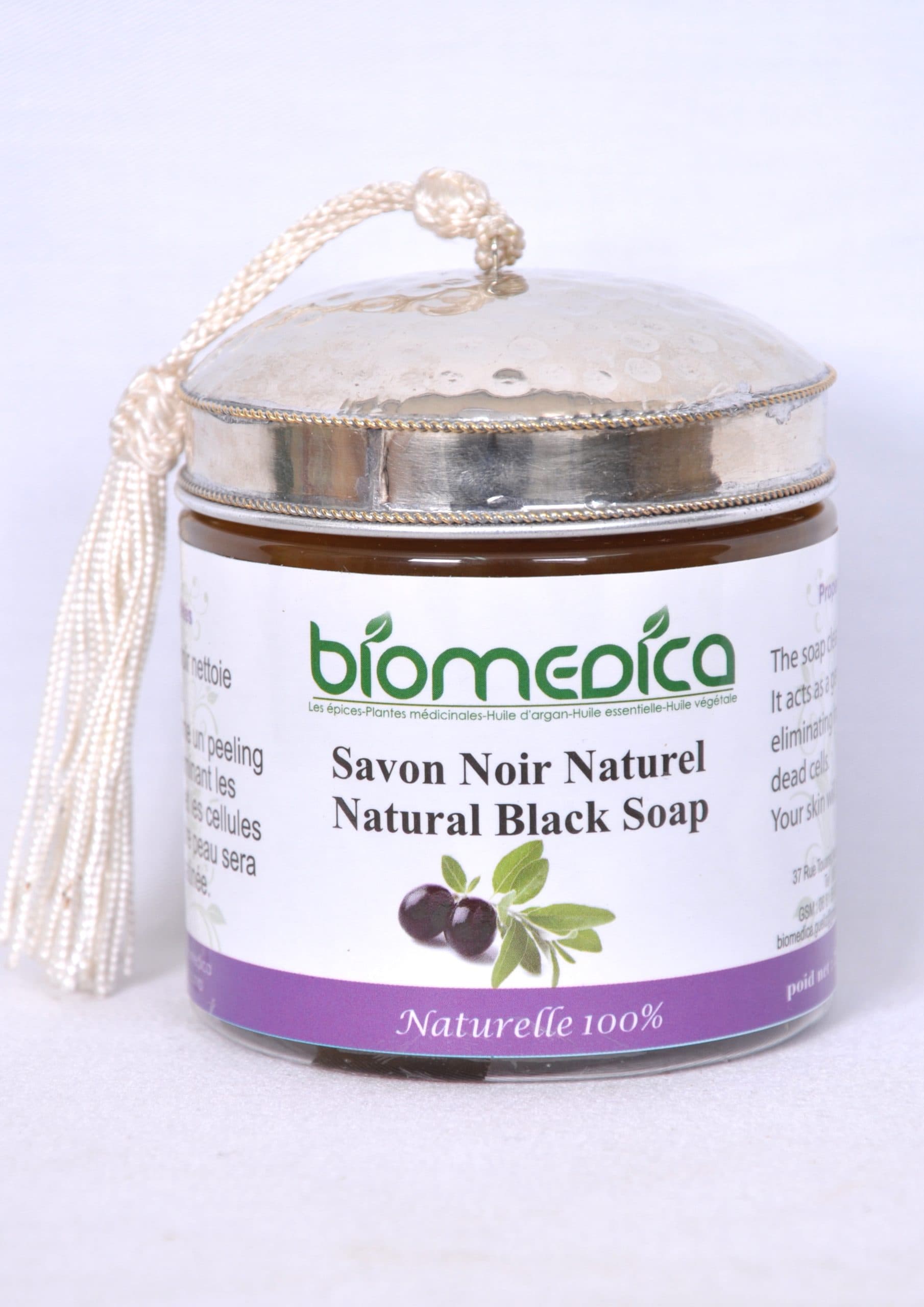
- A small amount of natural Moroccan black soap 250 g.
- Comfortably warm water.
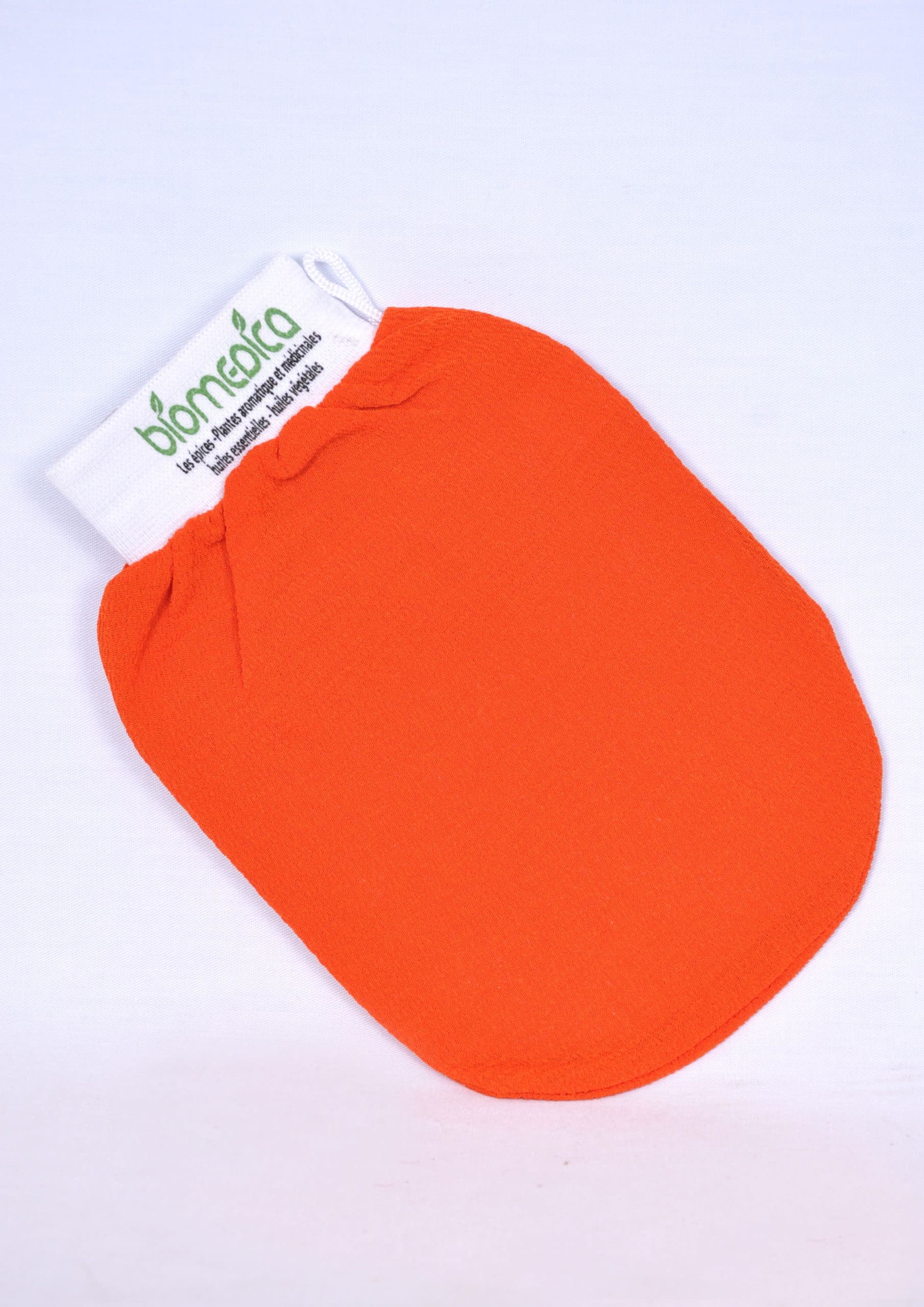
- A clean body exfoliating glove.
- A towel and, if it is already part of your routine, a simple body moisturizer.
You do not need a professional steam room. A bathroom warmed by the shower is enough for many people. Very hot water can make skin uncomfortable before exfoliation even starts.
How to use Moroccan black soap step by step
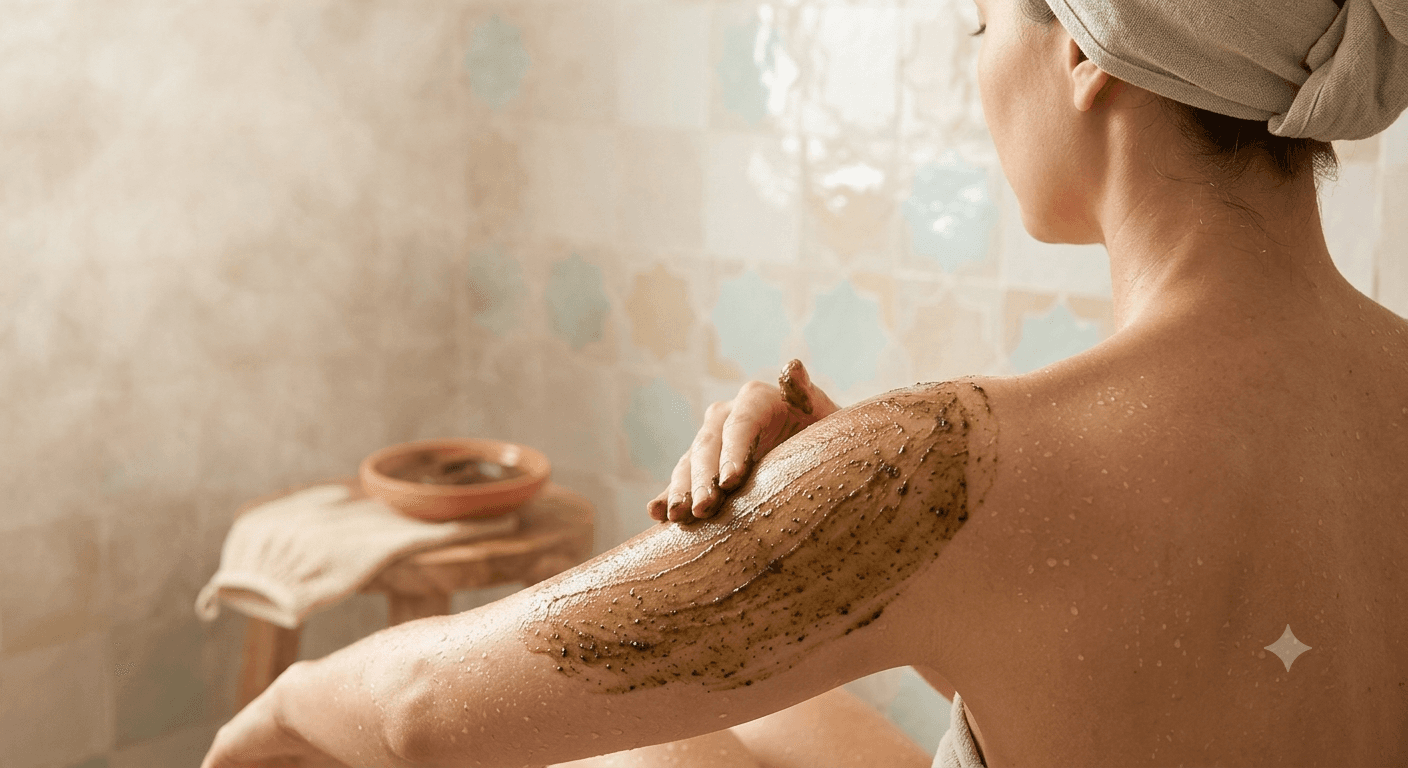
1. Wet and gently warm the skin
Spend a few minutes under warm water. Skin should be damp, not dried out by a long, very hot shower. Keep the paste away from the face and clear the floor because soap can make wet surfaces slippery.
2. Spread a thin layer
Start with roughly a pea-sized amount to one teaspoon, then adjust for the area and the texture of your jar. Spread a thin layer over the body, such as arms, legs, and back. Moroccan beldi paste does not need to produce a large amount of foam.
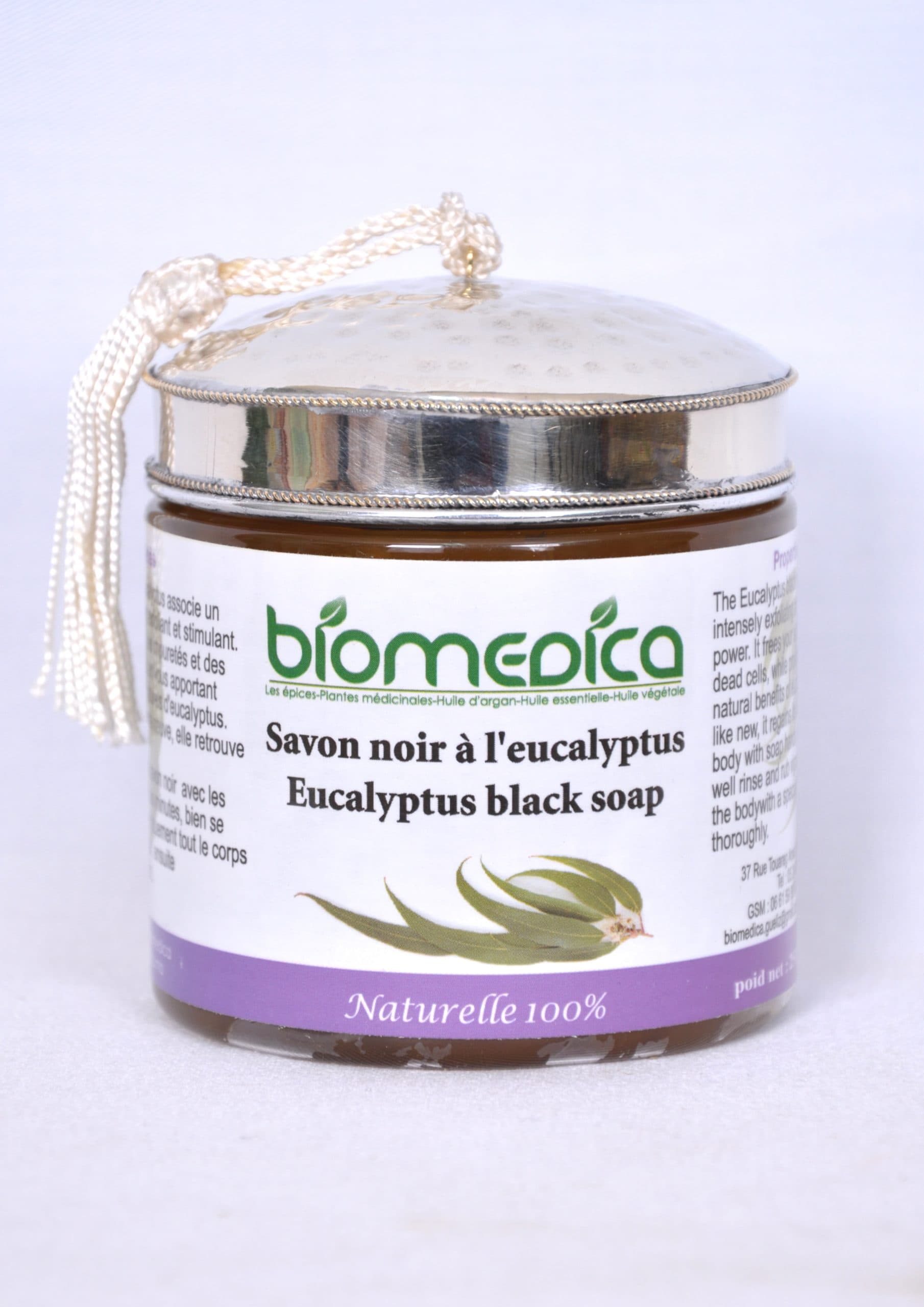
A scented option such as eucalyptus Moroccan black soap 250 g follows the same restrained method. Keep every formula away from eyes, mucous membranes, broken skin, freshly shaved areas, and existing irritation. Check the label for product-specific directions.
3. Leave it on briefly
Let the paste sit for a few minutes, following the manufacturer's directions and your own comfort. A longer wait is not automatically better. Rinse immediately if you feel unpleasant stinging, heat, or clear redness.
4. Rinse before exfoliating
Rinse away the soap thoroughly. The glove is then used on damp skin without a thick layer of paste. This makes friction easier to control and removes the temptation to keep adding product.
5. Use the kessa glove gently
Wring the glove lightly, then use even strokes on body areas that tolerate exfoliation. Begin with low pressure. Visible rolls may contain surface skin cells, residual product, and moisture. They are not a cleanliness score and are never a reason to scrub until skin hurts.
See our Moroccan black soap and kessa scrub guide for pressure, glove care, and areas to avoid.
6. Rinse and finish simply
Rinse again and pat skin dry. If you already use a well-tolerated body cream or oil, apply it to slightly damp skin. Do not stack several exfoliating products in the same session.
How much black soap should you use?
There is no universal amount because formulas vary in concentration and texture. Start small and add only enough to create a light film on the chosen area. A thick coating is harder to rinse and does not make aggressive scrubbing appropriate.
Compare plain and scented options in the Moroccan black soap category. Find gloves and ritual accessories in the Moroccan hammam category.
How often can you do a Moroccan black soap scrub?
Once a week works for many body-care routines. Some people tolerate two well-spaced sessions, while reactive skin may need a much longer interval. The right schedule should not leave lasting tenderness, burning, or discomfort when clothing touches the skin.
Wait longer after shaving, heavy sun exposure, or another exfoliating treatment. Stop if irritation continues and seek advice from a qualified professional when needed.
Can you use Moroccan black soap on your face?
Beldi paste and a body kessa glove are often too intense for facial skin. If the product label permits facial use, patch-test first, keep contact short, and never use a coarse body glove. Read our cautious face-use guide before adding it to a facial routine.
Common mistakes to avoid
- Using a thick layer to try to speed up exfoliation.
- Scrubbing dry, irritated, sun-stressed, or freshly shaved skin.
- Combining a kessa glove with acids, grains, or other exfoliants on the same day.
- Reusing a glove that stayed damp between sessions.
- Confusing Moroccan cosmetic beldi paste with household or garden black soap.
A short, consistent routine
Remember the sequence: damp skin, thin layer, short wait, rinse, gentle glove, final rinse. Moroccan black soap for the body supports mechanical exfoliation, but it does not replace paying attention to your skin. Browse the black soap collection and add a glove only if your routine needs one.
Our picks
Recommended products
Articles
More articles
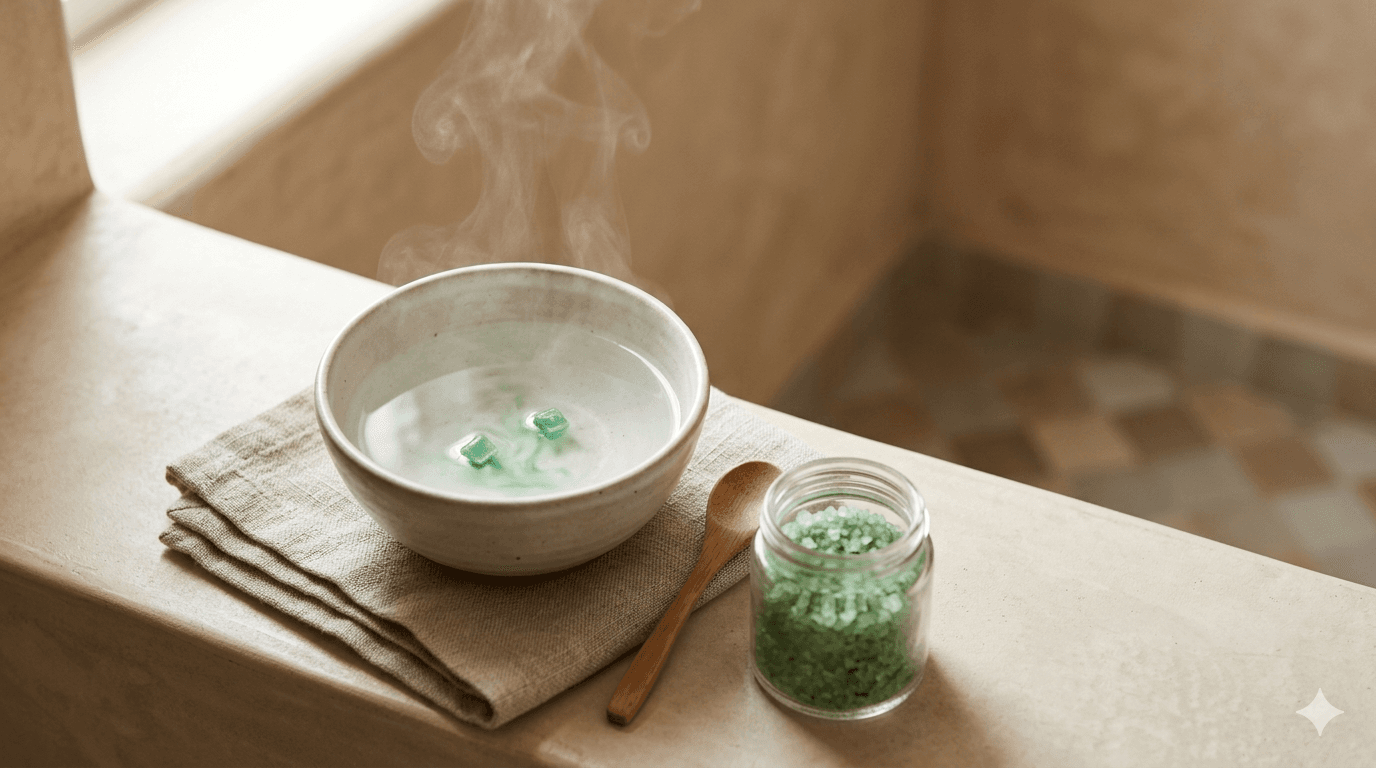
How to use eucalyptus crystals: a practical guide
Steam ritual, bathroom or home hammam in Morocco: learn how to use eucalyptus crystals with the right dose, safety tips and products to pair.
Read article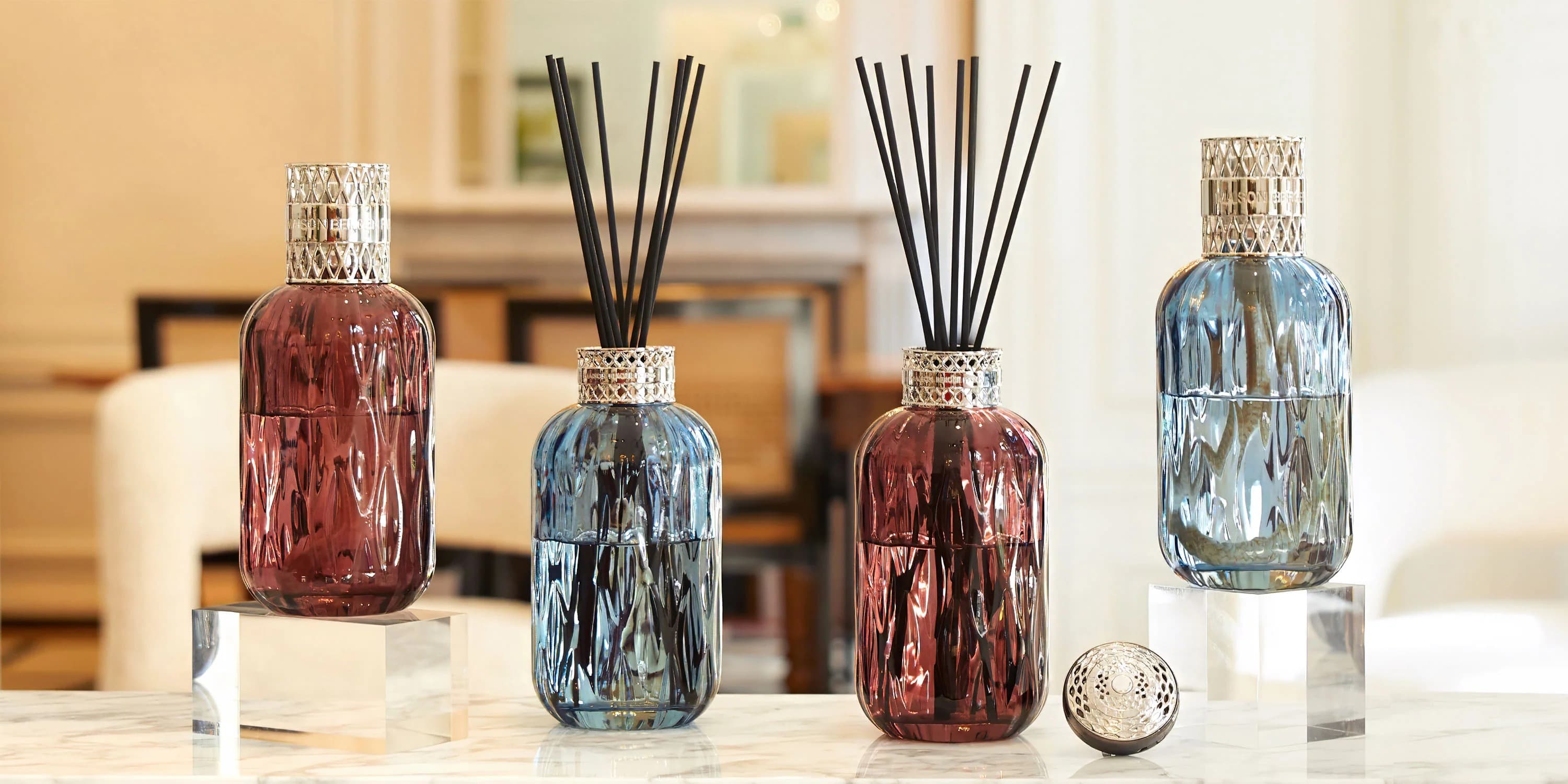
Room fragrance: how to scent your home (room by room)
A good room fragrance starts with the right dose: here is where to spray and which notes to choose for living rooms, bedrooms and entryways without overwhelming the space. Keep windows ready to air the room, and build a light signature that feels welcoming rather than heavy. Want your home to smell welcoming—not overwhelming? Here is how to scent your home room by room: where to spray, how much to use, and which notes fit each space.
Read article
How to choose a shower gel for your skin type
Choosing a shower gel is easier when you match texture and fragrance to your skin and climate. Here is a calm, practical way to decide without medical claims, with habits that work day after day in Morocco. Dry, sensitive, or normal skin: the right shower gel respects your skin barrier. Here is how to pick a scent and routine that work in Morocco’s climate.
Read article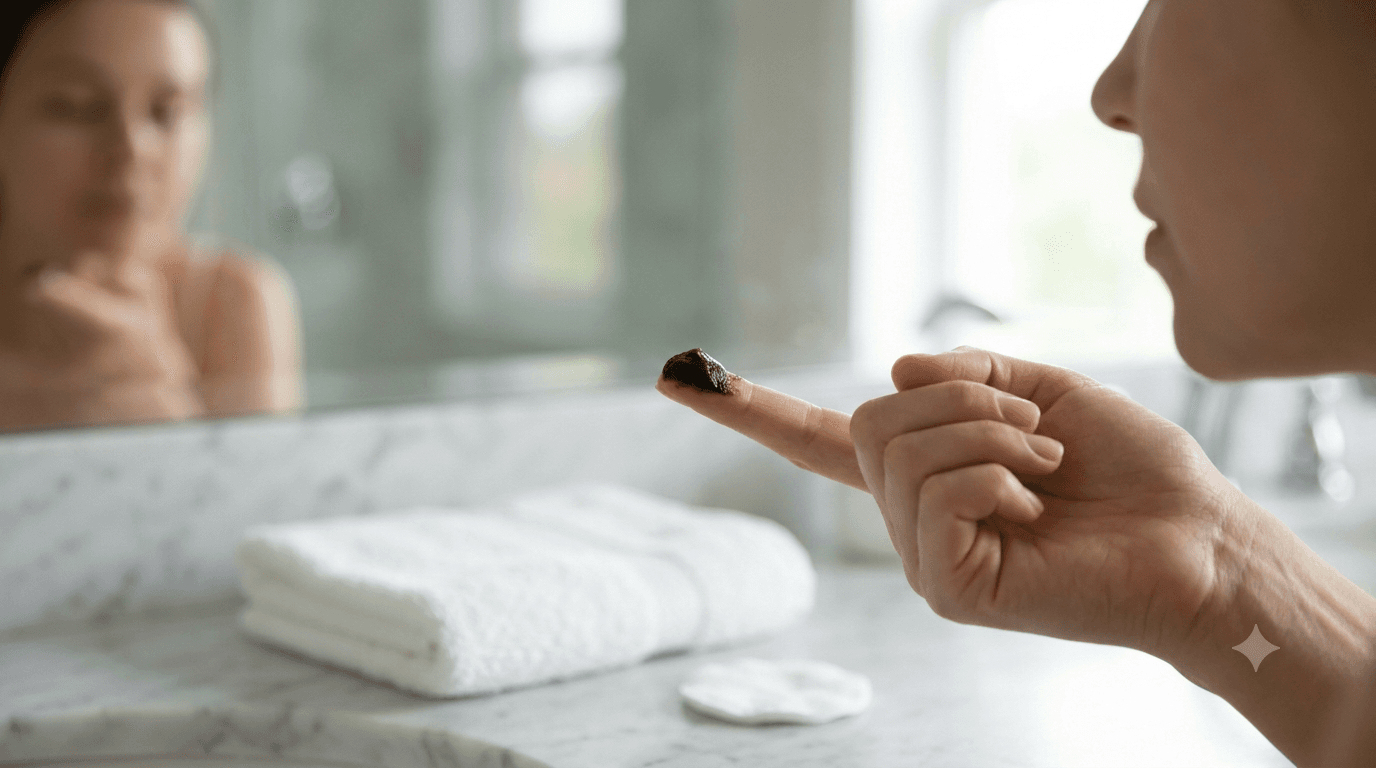
Moroccan black soap on the face: a cautious guide
Moroccan black soap is mainly associated with body exfoliation. For facial use, check the label, patch-test, keep contact brief, and never use a body kessa glove.
Read article
Frequently asked questions
On damp body skin, spread a thin layer of beldi paste, wait briefly, rinse fully, then use a clean kessa glove with light pressure. Once or twice a week suits many people.
Same sequence in a steam room or warm shower: gentle heat, thin paste, rinse, then measured mechanical exfoliation with the glove.
Start with a pea-sized amount. A thin film is enough. Extra paste does not make the scrub more effective.
The glove scrubs after the paste is rinsed off. Use low pressure, especially on sensitive skin.
Biomedica savon noir category: natural, eucalyptus and argan 250 g jars with Morocco delivery.
Ready to complete your routine?
Shop the products mentioned in this article, delivered in Morocco.
Shop the store